
Rivian going out of business is a trending concern in 2026 as the electric vehicle market faces a significant cooling period. While the company has struggled with high production costs, its recent multi-billion dollar partnership with Volkswagen has provided a much-needed financial lifeline. The success of the upcoming R2 and R3 platforms will ultimately determine the brand’s long-term viability against established competitors. Currently, Rivian is focused on achieving positive gross margins rather than filing for any form of bankruptcy or liquidation like the Ferris Mowers.
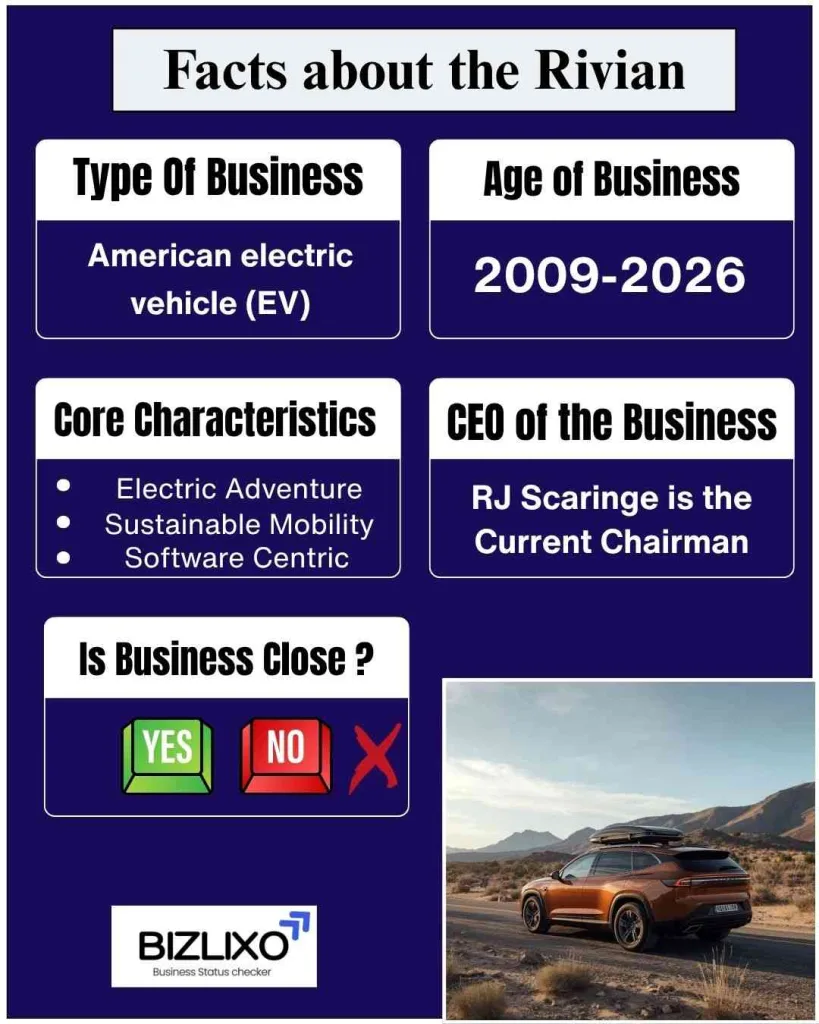
Rivian Going Out of Business Timeline
- 2009 (The Foundation): RJ Scaringe starts Mainstream Motors, which is later renamed Rivian to focus on sustainable adventure vehicles.
- 2018 (Prototype Debut): The R1T and R1S are unveiled at the LA Auto Show, capturing the world’s attention with unique “tank turn” capabilities.
- 2021 (Public Listing): Rivian completes a massive IPO, raising $12 billion and becoming one of the most valuable automakers by market cap.
- 2024 (The VW Lifeline): A $5 billion joint venture with Volkswagen is announced, securing Rivian’s software future and providing critical cash flow.
- 2025 (R2 Pre-Orders): Over 100,000 reservations are placed for the R2 SUV, signaling strong consumer demand for a more affordable Rivian model.
- 2026 (Production Pivot): Rivian temporarily pauses R1 production to retool its Normal, Illinois plant for high-volume R2 manufacturing efficiency.
Is Rivian Going Out of Business? 2026 Update
Rivian is not going out of business in 2026 and is still a strong player in the electric vehicle market. Even though EV demand has slowed, the company delivered 10,365 vehicles in Q1 2026, which beat expectations much like the Advance Auto.
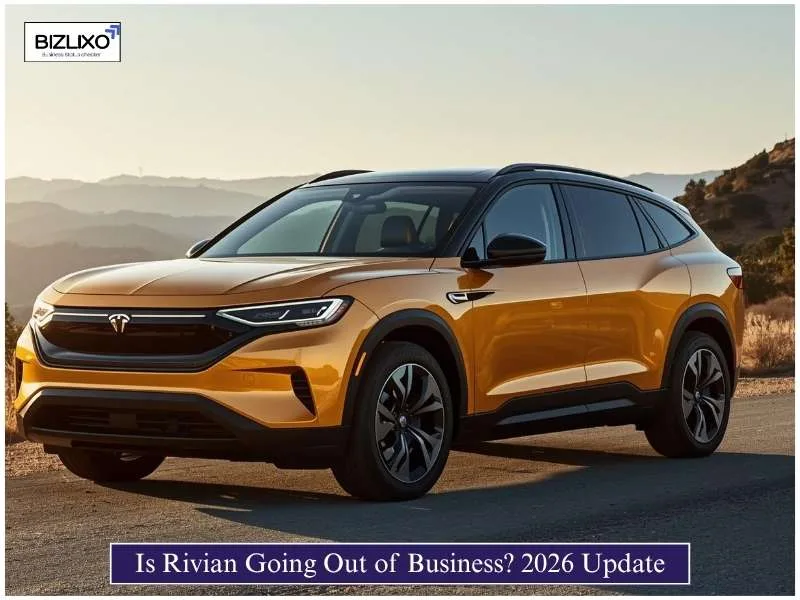
Rivian has also moved past its heavy cash loss phase with support from big investors. While its stock price has gone up and down, production at its Illinois plant is stable. The company has enough funds to continue growing and launching new products. Overall, Rivian is seen as a stable company with a future in the EV industry.
Rivian Bankruptcy Rumors vs. Financial Facts
Bankruptcy rumors are not true, as Rivian had about $6.1 billion in cash at the end of last year. The company is still losing money per vehicle, but the loss has reduced by over $7,000 per unit due to cost cuts. Its strong cash position is expected to grow further with a $2 billion payment from Volkswagen.
Rivian also has a manageable level of debt and has delayed major repayments to later years. Investors are more focused on improving profit margins than worrying about bankruptcy. Overall, the company is financially stable and not at risk of shutting down.
| Financial Metric | 2026 Q1 Actuals | 2026 Full-Year Guidance |
| Deliveries | 10,365 Vehicles | 62,000 – 67,000 Units |
| Production | 10,236 Vehicles | Focus on R1 & R2 readiness |
| Cash Position | ~$6.1 Billion | Sufficient for R2 Launch |
The $5 Billion VW Deal: Is Rivian Safe Now?
The $5 billion deal with Volkswagen has made Rivian’s financial position much safer for the next few years. In March 2026, Rivian received an extra $1 billion after completing important software testing for VW vehicles.
This partnership gives Rivian steady funding in return for sharing its advanced technology and software. Volkswagen benefits by improving its own software systems, while Rivian gets support to move toward R2 production. This deal turns Rivian into a key tech partner for major car companies. Overall, it adds strong financial stability to Rivian’s future.
Rivian R2 Launch: A Make-or-Break Moment
The R2 SUV is the most important product for Rivian, with deliveries starting in Spring 2026. It starts at around $45,000 and is made to compete with popular models like the Tesla Model Y. This launch is very important for the company to start making profits.
Early reviews are very positive, especially for its 300+ mile range and adventure-style interior. The success of production will decide Rivian’s future growth. If everything goes well, it can become a major global car brand.
Why Rivian Isn’t Closing: 2026 Strategy
Rivian is staying strong in 2026 by using a smart “Lean and Licensed” strategy instead of only relying on vehicle sales. The company is earning extra income by licensing its software and advanced electronics to other car makers. It has also paused its Georgia plant project to save about $2.25 billion in costs.
All production is now focused on its Illinois factory to use resources more efficiently. This helps reduce expenses and keep operations simple. By controlling spending and finding new income sources, Rivian is staying stable. This is why it continues to operate while many other EV startups are struggling.
| Strategy Pillar | 2026 Execution | Benefit |
| Software Licensing | VW & Autonomy+ Subscriptions | High-margin recurring revenue |
| CapEx Efficiency | Pausing Georgia Plant build | Saved $2.25 billion in cash |
| R2 Production | Integrated into Normal, IL line | Faster time-to-market |
Rivian Layoffs: Crisis or Strategic Pivot?
The layoffs in early 2026 were not a crisis but a planned move toward automation and modern production. Less than 1.5% of employees were affected, mostly from older sales and commercial roles. These jobs were no longer needed as the company shifts its focus. Rivian is now training workers for R2 production, which needs more technical and robotics skills.
This change has helped cut operating costs by nearly 20% compared to two years ago. While layoffs are tough, they have made the company more efficient. Overall, it is a strategy to improve speed and performance, not a sign of failure.
The Future of Rivian: 2026-2027 Outlook
Rivian’s future in 2026 and 2027 focuses on launching the R2 worldwide and introducing smaller models like R3 and R3X. The company expects to make its first positive profit per vehicle by the end of 2026. This will improve investor confidence and show real progress.
Rivian is also expanding its charging network to support all EV brands, creating new income. A partnership with Uber to launch 50,000 autonomous R2 vehicles by 2027 is also planned. This shows a move into robotaxi services. Overall, Rivian is shifting from a niche brand to a larger tech and mobility company.
Rivian Store Closures & Service News
Rivian is not closing down its stores; it is actually expanding its Spaces and Service Centers in 2026. While a few small pop-up shops have closed, the company has opened 15 new permanent service centers in cities like Dallas and Seattle.
It is also launching “Mobile Service 2.0,” which can fix about 80% of issues at the customer’s home. This reduces the need for many physical locations and makes service more convenient. The company is focusing on better support as more customers buy its vehicles. By the end of 2026, Rivian expects over 200,000 vehicles on the road.
| Service Expansion | 2026 Status | Focus |
| Physical Centers | 15 New Openings | Supporting R2 high-volume markets |
| Mobile Service | 80% Repair Capability | Lowering “Cost-to-Serve” per customer |
| Charging | Open to All EVs | Generating 3rd-party charging revenue |
Can Rivian Survive the 2026 EV Slowdown?
Rivian is handling the 2026 EV slowdown by focusing on premium adventure vehicles, where buyers are less affected by high interest rates. Even though overall EV growth dropped to about 1.5%, demand for models like the R1S SUV is still strong. The company is also growing its commercial van business beyond Amazon to reach more customers.
By working with logistics companies, Rivian is building a steady flow of orders. This helps protect the business even when general demand is slow. The company’s ability to adjust quickly is a big strength. Overall, Rivian is staying stable in a tough market.
Rivian’s $5.8 Billion Path to Profitability
The “$5.8 Billion Path” is the total money Rivian expects from the Volkswagen deal and software sales to reach financial stability. The company plans to become EBITDA-positive by the end of 2026 as R2 production increases.
Rivian is also reducing about $7,200 cost per vehicle by using simpler motors and an easier battery design. Software services like “Autonomy+” hands-free driving are expected to grow by around 60% this year. This helps the company earn money beyond just vehicle sales. Overall, Rivian is building a stronger and more balanced income system for the future.
Is Rivian Going Out of Business 2024
In 2024, many people worried about Rivian’s survival. The company secured a $5 billion deal with Volkswagen for support. This helped it upgrade factories and develop new technology. Rivian also reduced costs to lower losses and stay stable. The year became a turning point for its survival.
Is Rivian Going Out of Business 2025
In 2025, Rivian is not going out of business at all. The company improved its production and made operations more efficient. It also launched its R2 platform to enter the mass market. Strong Amazon delivery van deals helped its revenue stay stable. Rivian avoided bankruptcy by improving supply chain and finances.
How is Rivian Doing as a Company?
By 2026, Rivian has become a stable and growing EV company. Its R2 and R3 models have strong demand and pre-orders. The company is known for advanced battery and software technology. It is now focused on increasing production to meet demand. Rivian is growing into a strong mainstream EV brand.
Is Rivian a Good Investment?
In 2026, Rivian is seen as a moderate-risk but high-reward investment. Experts believe its R2 launch can increase future sales. The company is improving financially and moving toward profit. It has a strong brand and loyal customer base. Long-term investors see good growth potential in it.
| Metric / Year | 2024 (Recovery) | 2025 (Transition) | 2026 (Expansion) |
| Key Event | VW Partnership ($5B Deal) | R2 Production Line Setup | R2 & R3 Global Launch |
| Financial Status | Cash Burn Phase | Improving Efficiency | Close to Profitability |
| Major Customer | Amazon (EDV Fleet) | Expanding Fleet Sales | Retail Consumer Focus |
| Market Position | Niche Adventure Brand | Growing EV Competitor | Mainstream Tech Leader |
My Research about Rivian
As you know, I am the founder of Bizlixo, where I share business status and retail market updates. In my research about Rivian, I found that it is an electric vehicle company focused on trucks, SUVs, and sustainable mobility solutions. The company is still operating and working on scaling production and improving deliveries. Overall, Rivian remains active in the EV market and continues to develop its future growth plans.
Final Remarks
In conclusion, Rivian is not going out of business but is instead going through a challenging transition phase in a highly competitive EV market. The company is focusing on improving efficiency, scaling production, and preparing its next-generation vehicles to achieve long-term profitability.
Strategic partnerships and cost-control measures are helping strengthen its financial position despite short-term pressure. Overall, Rivian remains an active and evolving automaker with a clear focus on future growth and sustainability like the Triton Boats.
FAQs
Is Rivian filing for bankruptcy in 2026?
No, Rivian currently holds enough cash and investment capital to sustain operations through the R2 launch.
Will my Rivian warranty be valid if the company closes?
Federal laws and partnerships ensure that vehicle warranties are protected even during corporate restructuring.
Are Rivian’s delivery vans for Amazon still being produced?
Yes, the partnership with Amazon remains active with thousands of electric delivery vans (EDVs) on the road.
Can I still get parts for my Rivian R1T if production slows?
Yes, Rivian maintains a dedicated service network and parts inventory for all existing vehicle owners.
Is the Rivian R2 still coming out in 2026?
Yes, the R2 is on track for its scheduled release, serving as the company’s primary growth driver.