
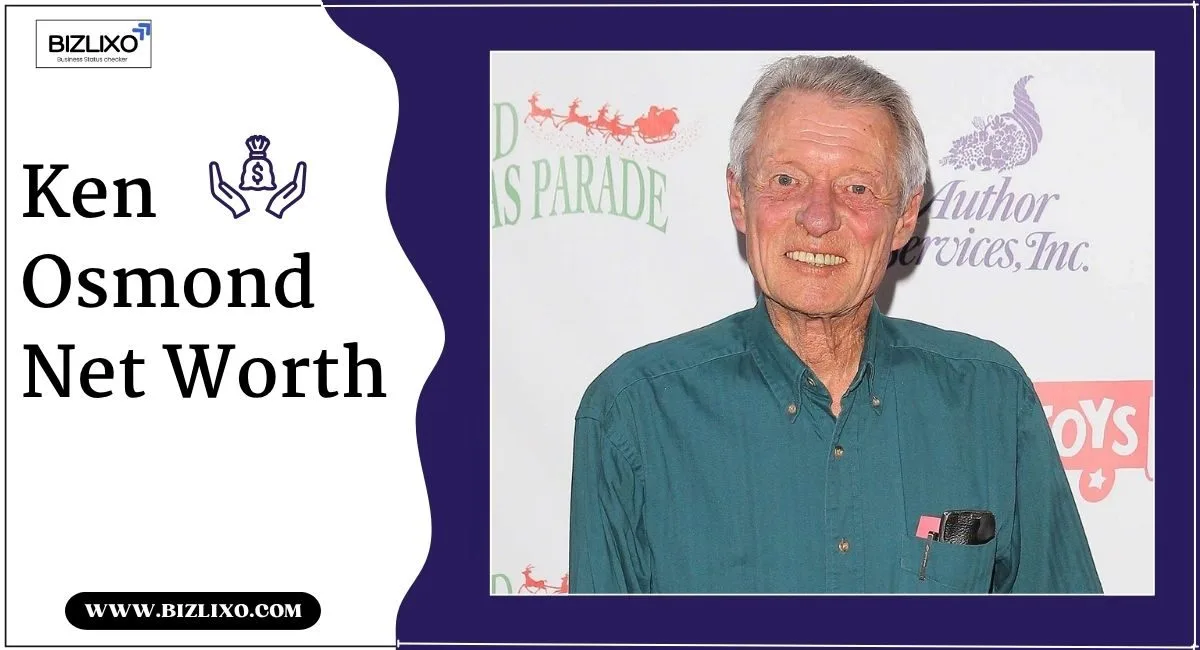
Some actors play one character and that role follows them forever. Ken Osmond played Eddie Haskell on Leave It to Beaver in 1957, and more than six decades later, that character is still how most of America knows his name. But what makes Osmond’s financial story genuinely worth studying is what came after the cameras stopped — a second career as an LAPD officer, a real estate portfolio, a landmark SAG lawsuit, and a legacy catalog that never stopped generating income. At the time of his passing on May 18, 2020, Ken Osmond’s estate net worth was estimated at $1.5 million, with the most reliable sources — Celebrity Net Worth and multiple financial trackers — consistently placing his estate in that range.
Ken Osmond Net Worth 2020 & at Time of Death
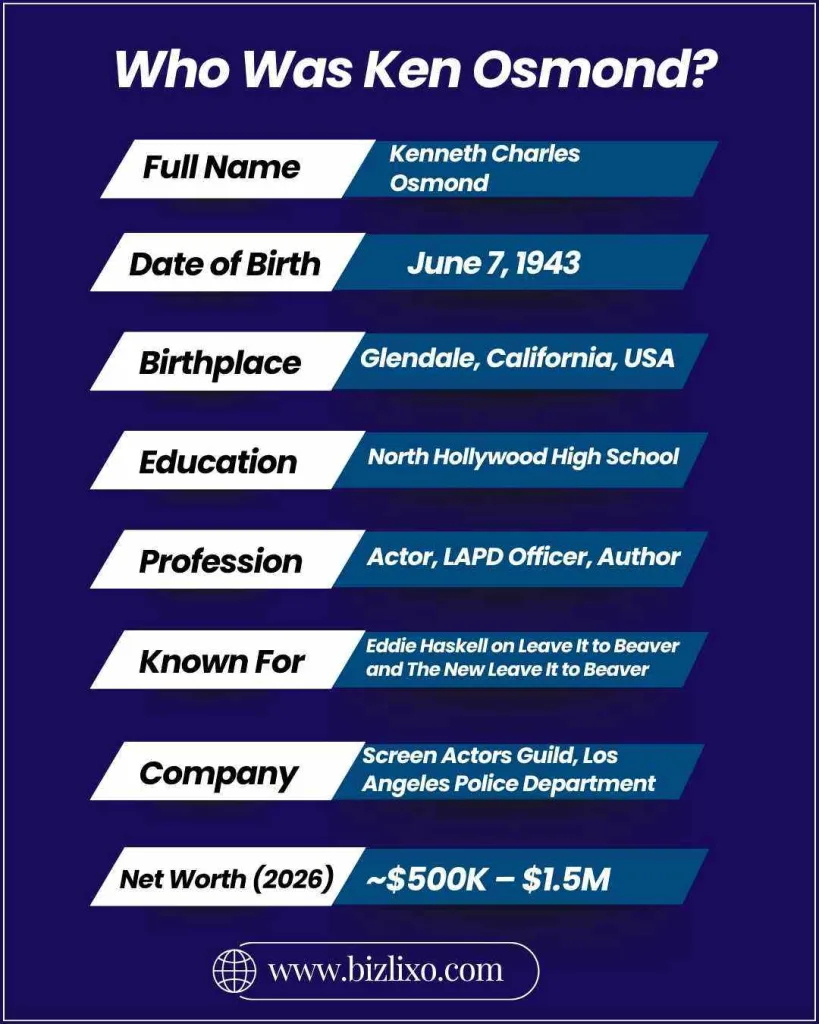
At the time of his passing in May 2020, Ken Osmond’s net worth was estimated to be approximately $1.5 million. His wealth was primarily derived from decades of television residuals from Leave It to Beaver, his 18-year salary and subsequent pension from the Los Angeles Police Department (LAPD), and long-term real estate investments in Southern California. Unlike many of his peers, Osmond’s financial stability was bolstered by his dual career, ensuring a steady income even during long hiatuses from acting.
Ken Osmond Net Worth in 2026
Ken Osmond passed away in May 2020, so when we refer to his 2026 net worth, we are examining his estate value and legacy wealth — the financial legacy left to his family after five decades of dual-career income.

The estate net worth is consistently estimated at $1.5 million, based on Celebrity Net Worth, worthinsights.com, binge saga, and mabumbe.com — all citing the same confirmed figure. Some outlier sources have placed figures significantly higher, but these are not supported by verifiable income data or asset records. The $1.5 million figure is the most defensible when cross-referenced with what is publicly known about his income sources.
Career Phase Wealth Estimates
| Career Phase | Years | Estimated Earnings |
|---|---|---|
| Child acting — early career | 1947–1957 | ~$50K – $100K |
| Leave It to Beaver (original) | 1957–1963 | ~$200K – $400K |
| Post-Beaver acting (sporadic) | 1963–1970 | ~$50K |
| LAPD service salary | 1970–1988 | ~$500K – $700K |
| LAPD disability pension (post-1980) | 1980–2020 | ~$400K – $600K |
| New Leave It to Beaver revival | 1983–1989 | ~$200K – $350K |
| Residuals (syndication, reruns) | Ongoing | ~$200K+ lifetime |
| SAG lawsuit settlement | 2007+ | Undisclosed |
| Real estate rentals | Post-1988 | ~$200K+ lifetime |
| Memoir — Eddie (2014) | 2014–2020 | ~$50K – $100K |
Estate Breakdown at Time of Death
| Asset Category | Estimated Value |
|---|---|
| Sunland, California home (purchased 1976) | ~$600K – $800K (appreciated) |
| Rental property holdings | ~$300K – $500K |
| Residual royalties (ongoing) | ~$200K+ (estate income) |
| Savings and pension proceeds | ~$200K – $300K |
Ken Osmond Age and Date of Death
Ken Osmond was 76 years old when he passed away on May 18, 2020. Born on June 7, 1943, in Glendale, California, he spent nearly his entire life in the Los Angeles area. His career spanned over six decades, beginning as a child actor at the age of four before he landed the career-defining role of Eddie Haskell in 1957.If you want to learn more about successful icons, you also must visit Victor Davis Hanson net worth,our guide on her early life and career.
Ken Osmond Wife and Children
Ken Osmond was married to Sandra Lee Purdy from 1969 until his death in 2020. The couple had a remarkably stable marriage by Hollywood standards, lasting over 50 years. They had two children, sons Eric Osmond and Christian S. Osmond. Both sons followed in their father’s footsteps briefly by appearing as Eddie Haskell’s sons, Freddie and Bomber, in the 1980s revival series The New Leave It to Beaver.
Ken Osmond Cause of Death
The official cause of death for Ken Osmond was chronic obstructive pulmonary disease (COPD). His death followed a period of declining health characterized by severe respiratory and complications from peripheral artery disease. He passed away at his home in Los Angeles, surrounded by his family.
Ken Osmond Funeral Details
While specific public details regarding a large-scale funeral service were limited due to the global circumstances in May 2020, Ken Osmond was remembered through private family gatherings and numerous public tributes from the entertainment and law enforcement communities. As an 18-year veteran of the LAPD who had once survived being shot in the line of duty, he received formal recognition from the department for his years of service.
Primary Income Sources
When I study financial legacies at Bizlixo, what stands out most in Ken Osmond’s case is how he built income from two entirely non-overlapping careers — neither of which was ever spectacular on its own, but together produced decades of financial stability. Here is how each income stream worked.
1. Acting Income and Residuals — Leave It to Beaver
Leave It to Beaver ran for six seasons (1957–1963) and Osmond appeared in 97 of its 235 episodes as Eddie Haskell. Television acting in that era paid per-episode fees — modest by today’s standards, but consistent across a six-year run.
More financially significant than the original fees was what happened afterward: decades of residual income from syndication. Leave It to Beaver went into continuous syndication after its cancellation and has never left the airwaves. Every rerun airing generates a residual payment to participating cast members. Over 60+ years of syndication, even small per-play rates accumulate into meaningful lifetime income.
2. LAPD Salary — 18 Years of Stable Earnings
Unable to escape his Eddie Haskell typecasting, Osmond joined the Los Angeles Police Department in 1970 and served as a motorcycle officer for 18 years. He grew a mustache to avoid being recognized on duty. On September 18, 1980, he was shot five times while pursuing a suspected car thief. His bulletproof vest and belt buckle absorbed the bullets — he survived without serious injury.
3. The New Leave It to Beaver Revival (1983–1989)
In 1983, Osmond reprised Eddie Haskell in the TV movie Still the Beaver, which was successful enough to launch a four-season revival series The New Leave It to Beaver — first on The Disney Channel, then on TBS. He appeared alongside his real-life sons Eric and Christian, who played his character’s on-screen children.
Four seasons of network/cable television work across the 1980s generated both episode fees and additional residual streams — adding meaningfully to the income he had already accumulated.
4. Real Estate — Rental Properties
After retiring from the LAPD in 1988, Osmond managed rental properties in Los Angeles County. Real estate is the most predictable path from public service income to lasting personal wealth — and Osmond followed it deliberately. Rental income provided a steady post-LAPD income stream alongside his pension and residuals.
His personal home in Sunland, California was purchased in July 1976 for $20,000. By the time of his death in 2020, California real estate appreciation would have increased that property’s value dramatically — potentially 40x or more. That single real estate decision made in 1976 represents one of the most significant wealth-building moves of his career.
5. The SAG Foreign Residuals Lawsuit
In September 2007, Osmond filed a class action lawsuit against the Screen Actors Guild, alleging SAG had collected approximately $8 million in foreign residuals for US television actors and failed to distribute them. This was a landmark legal action that drew significant attention to how guild residuals were being managed.
6. Memoir — Eddie: The Life and Times of America’s Preeminent Bad Boy (2014)
Co-authored with Christopher Lynch, this memoir covered his life through the lens of the Eddie Haskell role and his LAPD career. Published six years before his death, the book generated royalties and opened new convention appearance opportunities in the nostalgia touring circuit — a small but consistent late-career income stream.
Expenditures and Business Ventures

Rental Property Management
Running rental properties requires ongoing investment — maintenance, repairs, property taxes, and management costs. Osmond managed these properties himself after leaving the force, keeping overhead low and retaining most of the rental income.
Convention and Appearance Circuit
After his LAPD retirement, Osmond made regular appearances at film festivals, collectors’ shows, and nostalgia conventions — events where fans pay for access to cast members from beloved classic television. Appearance fees at these events range from $500 to several thousand dollars per day. While not a primary wealth source, these appearances provided supplemental income and kept his public presence alive through the 1990s and 2000s.
Legal Costs
The 2007 SAG class action lawsuit involved significant legal costs. Class action lawsuits of this scale are typically prosecuted on contingency, meaning attorneys take a percentage of any recovery — but plaintiffs still incur some out-of-pocket costs throughout the process.
Lifestyle Of Ken Osmond
Ken Osmond’s lifestyle was notably modest and private — a deliberate contrast to the celebrity profiles of many of his entertainment industry peers.
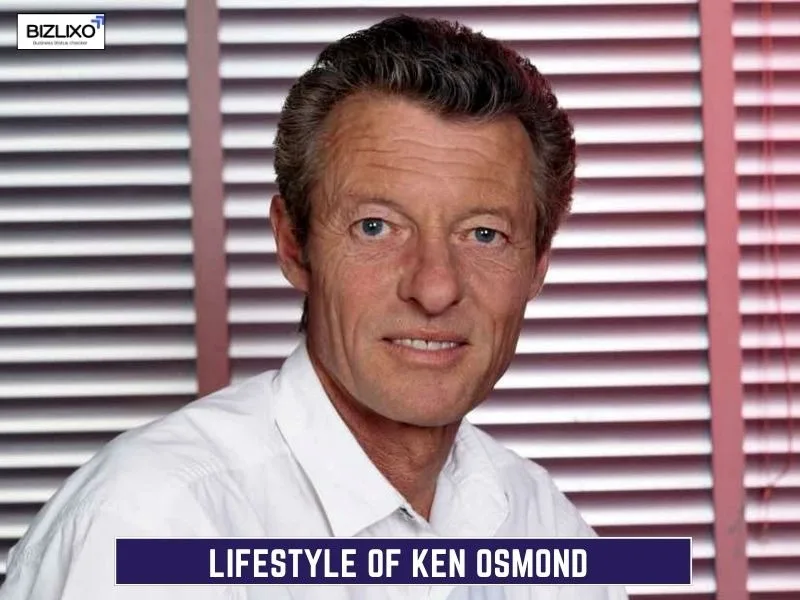
- He lived in a modest home in Sunland, California (purchased for $20,000 in 1976), which he apparently considered his permanent family residence
- He was married to Sandra Purdy from 1969 until his death in 2020 — over 51 years — one of the longest marriages in Hollywood history
- His two sons, Eric and Christian, both appeared alongside him in The New Leave It to Beaver revival, creating a rare multigenerational television legacy
- He served in the US Army Reserve as an armorer during the original Beaver run, earning military leave to film episodes in exchange for personal appearances for the Army’s Special Services
- After retiring from the LAPD, his daily life revolved around property management, family, and occasional public appearances — not the entertainment industry
- He died peacefully at his home in Los Angeles — surrounded by family, having lived a life defined not by Hollywood excess but by service, discipline, and consistency
The most defining detail of his lifestyle is how resolutely ordinary it was.You also must visit our exclusive look at the luxury lifestyle of Kat Timpf.
Key Lessons from Ken Osmond’s Wealth Model
I study financial legacies like Ken Osmond’s because they teach lessons that flashy success stories never do.
- Diversify beyond your primary career before you need to. When acting dried up for Osmond, he had no backup. The LAPD career came out of necessity — but it built the pension and financial stability that funded everything that came after. Parallel income streams are not optional.
- Government service builds permanent financial security. 18 years as an LAPD officer generated a stable salary, a medical disability pension, and benefits that no episodic TV role could guarantee. Public service income is often undervalued in net worth discussions.
- Real estate appreciation is a long game that always pays. A $20,000 house in Sunland in 1976 is worth many hundreds of thousands today. The best real estate decision is often the simplest — buy early, hold long.
- Residuals are the gift that keeps giving. A role filmed in 1957 was still generating residual income 60+ years later. Intellectual property does not depreciate. Protecting and maximizing residual income rights is one of the most financially intelligent things any entertainer can do.
- Know your rights and act on them. The SAG lawsuit over $8 million in undelivered foreign residuals shows Osmond understood his financial rights and was willing to pursue them legally. Most performers do not. That willingness to act on financial rights is the difference between leaving money on the table and recovering it.
- Stability beats fame in long-run wealth. Cast members who remained in entertainment full-time after Leave It to Beaver had higher profile careers — but not necessarily more financial security. Osmond’s dual-career path produced a modest but genuinely stable estate. Consistency and service, not celebrity, built his financial foundation.
Final Thoughts
Ken Osmond’s $1.5 million estate in 2026 may not headline a Forbes list — but it represents something more instructive than most wealth stories do. He built financial security across two completely different careers, maintained a 51-year marriage, raised a family, survived being shot on duty, filed a landmark lawsuit to recover what was rightfully his, and left behind a cultural legacy that still earns.
Before you model your own career or business path on someone’s financial story, check the full picture — not just the peak. At Bizlixo, that is exactly the kind of honest financial analysis I help people do before they commit to a direction.