
Many people have been wondering, “Is MyPillow going out of business?” and while the company has not completely shut down yet, it is clearly struggling to survive. Unlike Walgreens, MyPillow is still operating, but it has been hit hard by major legal problems and the loss of important retail partners like Walmart and Kohl’s.
The business has faced serious financial pressure, and reports suggest it has been forced to downsize, leave warehouse spaces, and sell equipment just to stay afloat. As of 2026, MyPillow continues on a much smaller scale, mostly selling directly through its website and TV-style promotions. Overall, it no longer has the strong national retail presence it once did, and its future remains uncertain.
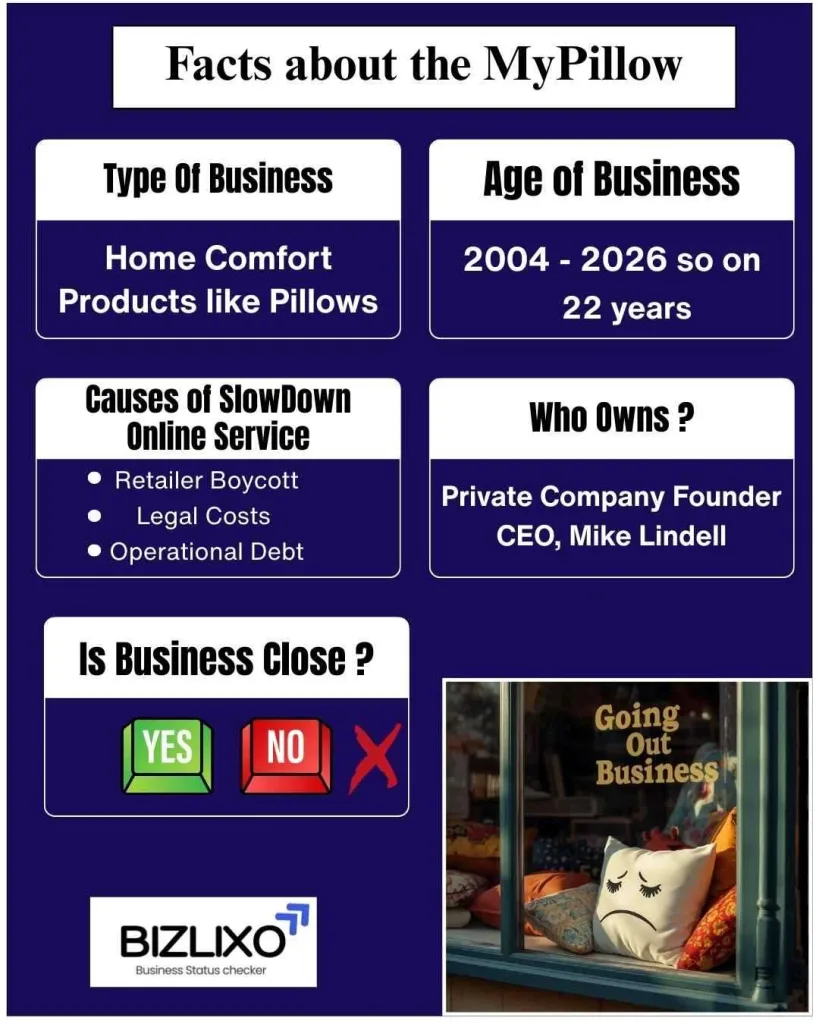
MyPillow Timeline & Details: 2004 – 2026
| Founding | 2004 | Founded by Mike Lindell in Minnesota; designed and patented the open-cell poly-foam pillow. |
| Early Success | 2005 – 2010 | Started via mall kiosks and home shows; Lindell focused on the business after overcoming personal addiction in 2009. |
| The Infomercial Era | 2011 – 2017 | Achieved national fame through ubiquitous TV infomercials; sold 41M+ pillows and grew to 1,500 employees. |
| Peak Growth | 2018 – 2020 | Expanded product line to bedding, sheets, and slippers; Lindell’s net worth reached an estimated $60M. |
| Retail Boycott | 2021 | Major retailers (Walmart, Kohl’s, Bed Bath & Beyond) pulled MyPillow from shelves due to election controversies. |
| Legal Warfare | 2022 – 2023 | Faced massive defamation lawsuits from Dominion and Smartmatic; auctioned off warehouse equipment to cover costs. |
| Financial Crisis | 2024 | Faced eviction from a Shakopee warehouse over unpaid rent; hit with lawsuits from shipping partners like FedEx and DHL. |
| Survival Mode | 2025 | Sold Chaska HQ for $3.2M to consolidate operations; Lindell turned to crowdfunding to manage mounting legal debts. |
| Legacy & Future | 2026 | Mike Lindell remains majority owner and officially entered the race for Minnesota Governor; MyPillow operates primarily online. |
| Status | 2026 | Still in Business. Operating as a lean, direct-to-consumer (DTC) brand while battling significant legal and financial debt. |
MyPillow’s Shift from Stores to Online Business
Before 2026, MyPillow was a very well-known brand across the United States. It started small, with simple kiosks, but quickly grew into a company whose pillows were sold in almost every major retail store. At its peak, customers could easily buy MyPillow products in person at places like Walmart, Kohl’s, and even in MyPillow’s own 17 branded stores.
However, things changed after 2021. Political boycotts and growing legal debts caused major retailers to stop selling MyPillow products. Over time, the company also had to close its own physical stores. Today, MyPillow is no longer focused on in-store sales. Instead, it has become a fully digital brand, selling mainly through its website and TV infomercials. This shift helps the company avoid the high costs of running physical store locations. I also discussed about a company which completely going out of business.
Why Walmart and Kohl’s Cut Business Ties?
Big retail stores such as Walmart, Kohl’s, and Bed Bath & Beyond stopped selling MyPillow products for two main reasons: weak sales and public controversy. First, these retailers said that customer demand for MyPillow had dropped. The pillows were not selling well, and stores did not want to keep products on their shelves that were underperforming.
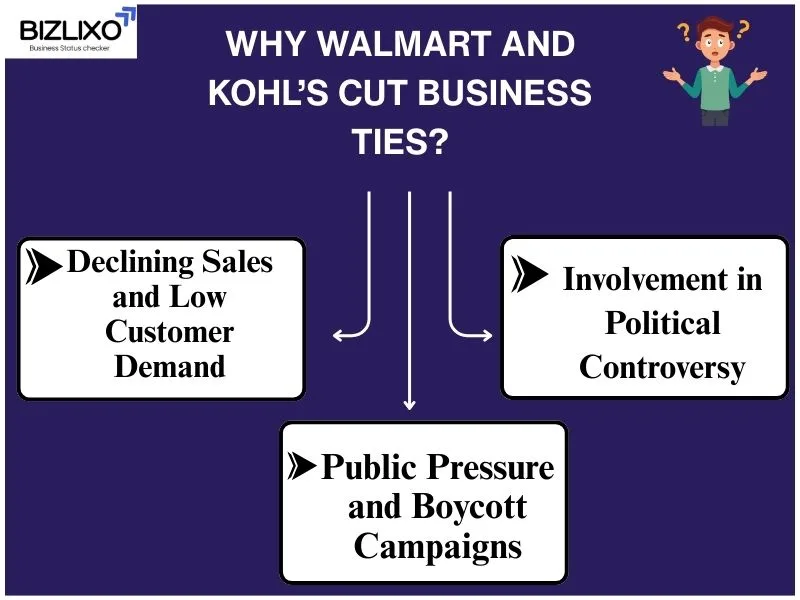
Second, MyPillow’s CEO, Mike Lindell, became involved in political controversy after making public claims about the 2020 U.S. election. This led to strong backlash, including boycott campaigns and criticism on social media. To avoid damage to their reputation and to focus on products that were more profitable and less controversial, many national retailers decided to cut ties with MyPillow.
As a result, by 2026, MyPillow became mostly dependent on selling directly to customers through its website and TV advertisements instead of major retail stores.
| Retailer | Primary Reason for Dropping | Current Status (2026) |
| Walmart | Poor sales performance and inventory shifts. | Not sold in-store or online. |
| Kohl’s | Decreased consumer demand and brand refreshing. | Permanently discontinued. |
| Bed Bath & Beyond | Data-driven decision based on low turnover. | Brand removed before liquidation. |
| Costco | End of contract due to low member interest. | No longer stocking any items. |
What People Are Thinking About MyPillow?
I can see that most people are genuinely surprised that MyPillow is still operating at all. From the reactions, it feels like many assumed the company had already faded away, so news about selling its headquarters and moving offices comes across as another sign of financial struggle.
I also notice that a lot of the discussion focuses on how the brand became heavily tied to controversy, which many believe hurt its reputation and sales. In my view, people feel that losing major retail partners, facing lawsuits, and declining customer support has put the company under serious pressure.
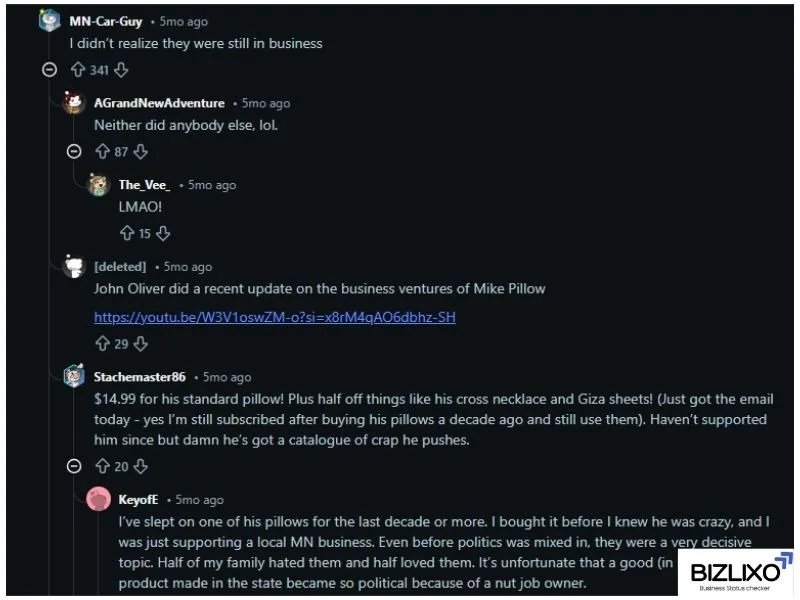
At the same time, I sense that some people think MyPillow is only staying afloat through a smaller, loyal customer base or continued donations from supporters. Overall, the general tone is skeptical, with many seeing the move as consolidation driven by survival rather than growth.
My Perspective About MyPillow Going Out of Business?
As you may already know, I’m Griffin Cottle, an Assistant Professor of Management and Entrepreneurship. My work involves keeping a close eye on businesses that are going through difficult times, especially when financial stress and public controversy start to affect their future. The truth is, the MyPillow story is about much more than pillows or TV commercials—it shows how political involvement and poor financial decisions can push a successful company close to collapse.
When I explored the question, “Is MyPillow going out of business?”, I realized this was not just a typical business slowdown. Instead, it highlights how moving to an online-only sales model may help a company continue operating, but can also bring new challenges during a crisis.
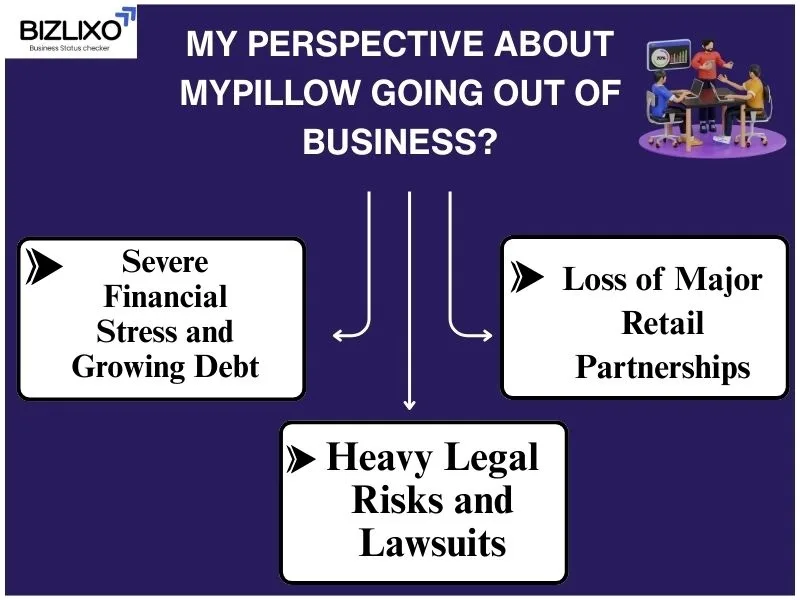
As of February 2026, MyPillow is in a critical stage. The company has completely left physical retail stores and now depends only on direct-to-consumer sales through its website and infomercials. From my perspective, three major factors are pushing MyPillow toward a breaking point:
1. Severe Financial Stress and Growing Debt
The biggest threat facing MyPillow right now is its rising debt. In late 2025 and early 2026, the company dealt with multiple legal judgments and unpaid bills, including millions owed to shipping companies like FedEx.
With credit lines frozen, MyPillow has reportedly turned to expensive short-term financing options, meaning it is operating under extreme financial pressure.
2. Loss of Major Retail Partnerships
Another major issue is that MyPillow has lost nearly all of its large retail partners. Unlike other companies that declined because of changing shopping habits, MyPillow’s problems grew faster because of public boycotts and controversy.
When major retailers like Walmart and Kohl’s stopped carrying the brand, MyPillow lost a steady and reliable source of income. Although selling only through its website and TV ads may reduce store costs, it also limits the company’s ability to reach new customers.
3. Heavy Legal Risks and Lawsuits
The most serious long-term challenge is MyPillow’s legal situation. The company is facing major defamation lawsuits connected to voting machine companies such as Dominion and Smartmatic.
These cases involve extremely large potential damages. For a private company whose CEO has admitted that his personal finances are drained—especially while running for Minnesota governor in 2026—these legal battles could be impossible to overcome through marketing alone.
What Lessons We Can Learn From MyPillow Company
From my point of view, the first lesson is that we should always pay close attention to the direction our business is heading and understand market trends early. Second, even if our business becomes successful, we should keep our success and personal opinions limited instead of turning the brand into a public controversy.
It is also important to stay focused on our work and avoid unnecessary distractions that can damage customer trust. Most importantly, business owners should be careful about getting too involved in politics, because it can easily harm both reputation and long-term stability.
Final Remarks
As I studied the case of MyPillow, it became clear that the company has not completely gone out of business, but it is no longer operating at the level it once did. By 2026, MyPillow has been forced to shrink its operations, leave major retail stores, and rely mostly on online and direct sales. The brand’s financial struggles, legal troubles, and loss of partnerships have placed it in a very uncertain position. Overall, MyPillow’s future depends on whether it can survive these challenges and rebuild trust over time.
FAQs
Is MyPillow still selling products in physical stores in 2026?
No, by 2026 MyPillow is mostly no longer available in major retail stores and relies mainly on online and direct-to-consumer sales.
Can MyPillow recover from its current financial situation?
Recovery is possible, but it depends on resolving legal issues, rebuilding customer trust, and stabilizing the company’s finances.
Did MyPillow officially file for bankruptcy?
As of 2026, MyPillow has not officially declared bankruptcy, but it has faced major financial and legal pressure.
Why does MyPillow still have a loyal customer base?
Some supporters continue buying from MyPillow due to brand loyalty, political alignment, or belief in the company’s mission.