
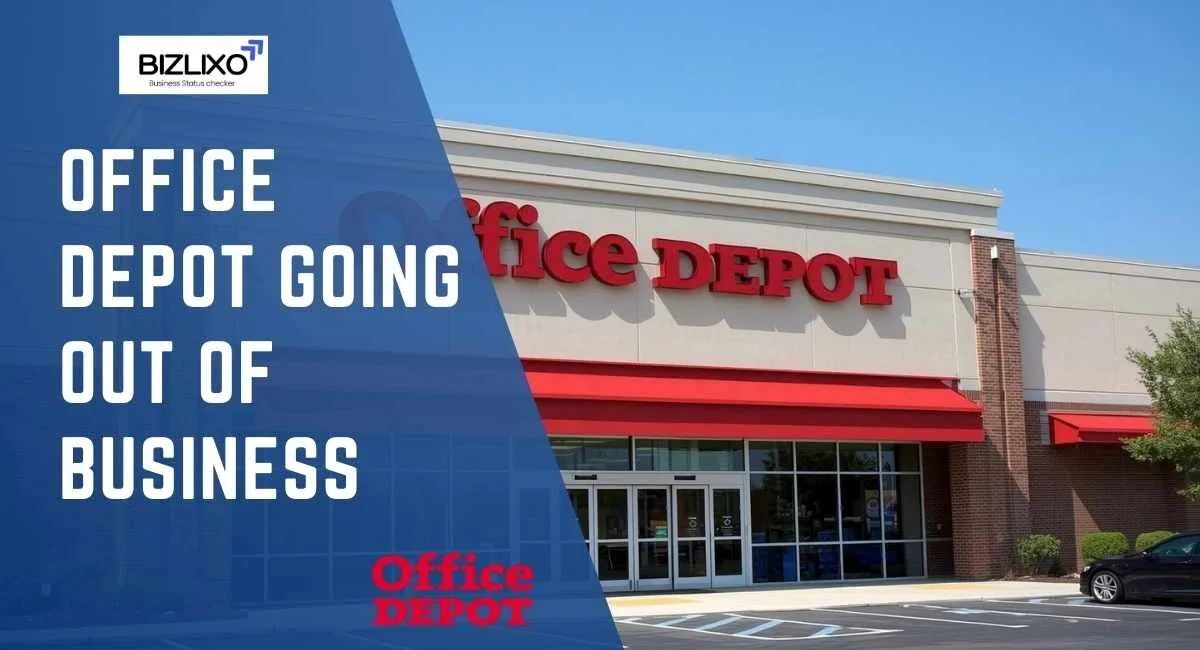
Office Depot going out of business is a topic many people are searching online after hearing news about store closures. Some locations have shut down, which has made customers wonder if the entire company is closing. However, store closures do not always mean a business is shutting down completely. Many companies close certain locations while continuing to operate in other areas.In this article, we will explain the real situation behind Office Depot and its current business status, Ferris Mowers.
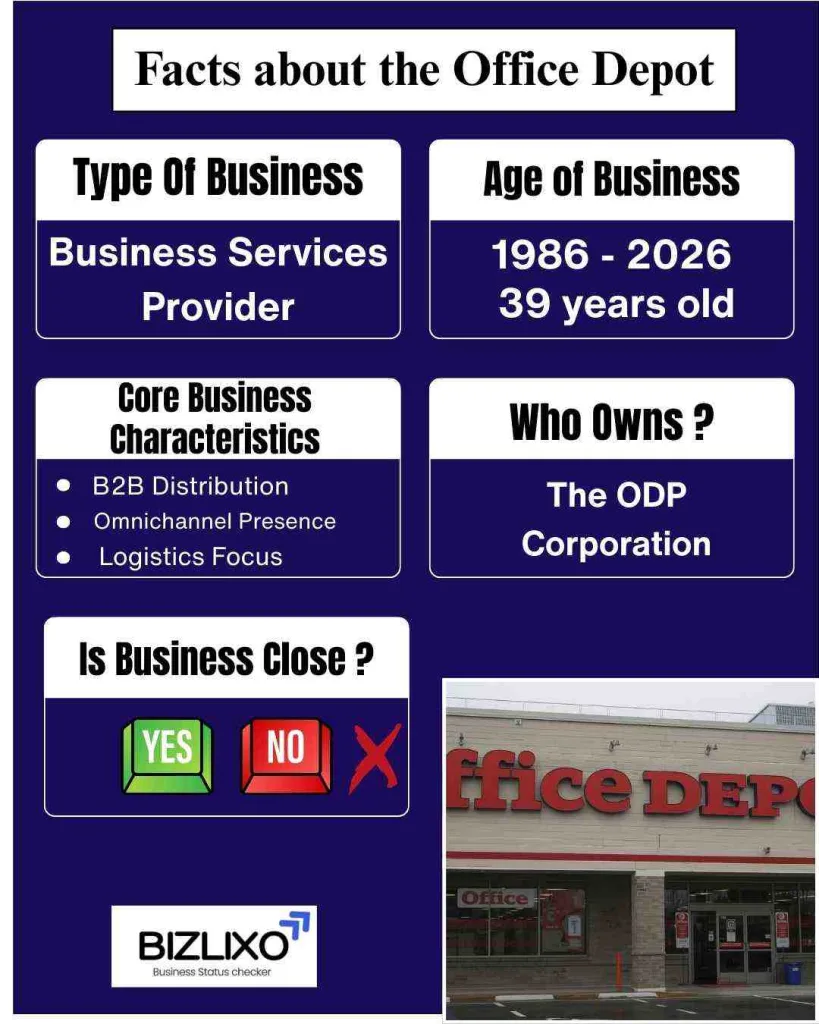
Office Depot: Key Timeline
- 1986: The first store was opened in Lauderdale Lakes, Florida, by F. Patrick Sher, Stephen Dougherty, and Jack Kopkin.
- 1988: The company went public and began trading on the stock exchange.
- 1991: Merged with Office Club, Inc., becoming the largest office supply retailer in North America.
- 1998: Acquired Viking Office Products and launched their e-commerce website, officedepot.com.
- 2013: Completed a major merger with OfficeMax to expand their retail footprint.
- 2020: The company rebranded as The ODP Corporation to distinguish between its retail stores and its B2B services.
- 2025: In December 2025, the company was acquired by Atlas Holdings, transitioning Office Depot back into a private company.
Office Depot Going Out of Business: What’s Happening in 2026?
Office Depot is not going out of business in 2026. Instead, it is going through a big restructuring after being bought by Atlas Holdings for $1 billion in December 2025. The company is now private and focusing on running more efficiently under new leadership, like Orvis.
While it has closed over 1,000 stores since 2013, these closures are part of a plan to focus on more profitable B2B services and supply chain solutions. Office Depot continues to operate its remaining stores and online platforms while shifting its main focus to serving businesses rather than just retail customers.
A Brief Overview of Office Depot
Office Depot has grown from a simple stationery store into a full B2B business platform. The company now focuses on helping large corporations, small businesses, and individual customers with workplace solutions like furniture, tech support, printing, and logistics.
Its services are supported by ODP Business Solutions, its retail and online stores, and Veyer, a supply chain and logistics division with over 40 fulfillment centers. By using digital tools and AI, Office Depot has shifted from just selling office supplies to offering complete workplace solutions.
Key Areas of Focus
- ODP Business Solutions: Provides procurement and workplace services for large companies.
- Retail & E-Commerce: Manages stores and online sales for small businesses and individuals.
- Veyer 3PL: Handles logistics and distribution through 40+ fulfillment centers.
- Digital Tools: Uses AI and software to improve efficiency and customer support.
Why Are Some Office Depot Stores Closing?
Office Depot is closing some stores as part of a plan to focus more on business-to-business (B2B) services instead of regular retail. Stores are mostly closed when leases end or if they don’t get enough customers, especially in malls, or face strong competition from online stores like Amazon.
By reducing the number of physical locations, the company can save money and invest more in ODP Business Solutions and its logistics network, Veyer. This downsizing is part of a long-term plan to modernize the brand and focus on enterprise-level services rather than traditional retail sales.
Who Owns Office Depot Today?
Office Depot is now owned by the private equity firm Atlas Holdings, which bought The ODP Corporation for $1 billion in December 2025. The company was originally started in 1986 by F. Patrick Sher, Stephen Dougherty, and Jack Kopkin as a public warehouse for office supplies.
Today, Office Depot is private under Atlas Holdings, which plans to use its experience in manufacturing and distribution to shift the business from retail to enterprise-level B2B services. This change also ended ODP’s time on the Nasdaq, letting the company focus on faster operations and its own supply chain network.
Current Business Status of Office Depot
As of 2026, Office Depot is a private company owned by Atlas Holdings, which completed its $1 billion acquisition in December 2025. Under new CEO Craig Gunckel, the company is shifting away from being a traditional retail chain to focus on two main areas: ODP Business Solutions for enterprise clients and its retail/online stores.
This includes restructuring operations and closing underperforming locations to save costs and increase efficiency. The brand now emphasizes a high-efficiency distribution model using its supply chain subsidiary, Veyer, to provide integrated workplace, furniture, and technology services, moving away from broad consumer retail.
| Segment | Primary Focus | Business Model |
| ODP Business Solutions | Large Enterprises | Contract-based B2B services |
| Retail & E-commerce | Small Business/Consumer | Omnichannel sales |
| Veyer | Logistics & Supply Chain | 3PL & Distribution network |
Challenges Facing the Office Supply Retail Industry
The office supply retail industry is facing big challenges as more companies go digital and employees work remotely, which reduces the need for traditional office products. Stores are struggling to move from costly physical locations to faster, tech-based B2B distribution systems. This shift is harder because large online platforms dominate the market with better automation and faster delivery.
Key Industry Challenges
Digital Transformation: Using paperless offices and cloud tools has cut demand for regular office supplies.
E-commerce Dominance: Online competitors use AI and efficient systems that beat traditional supply chains.
Shift to Remote Work: Hybrid work means offices need fewer central stores for supplies.
High Operational Costs: Running many physical stores is expensive with less customer traffic.
What the Future Looks Like for Office Depot?
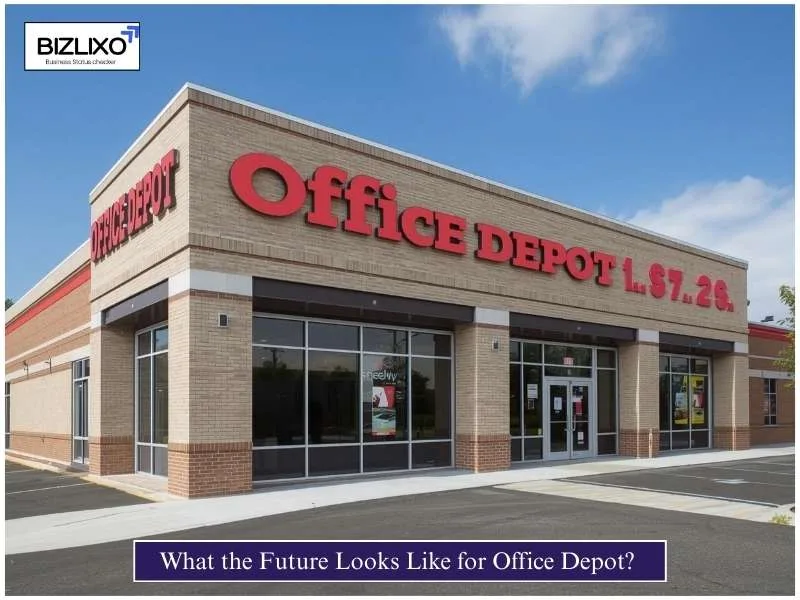
As of 2026, Office Depot’s future is defined by its transition into a leaner, privately held enterprise under Atlas Holdings. The company is aggressively moving away from its historical identity as a broad-market retail chain to focus on high-margin B2B services and integrated supply chain solutions.
By moving out of the public markets, the company has gained the operational agility to accelerate its digital transformation, reduce redundant overhead, and prioritize the growth of its ODP Business Solutions and Veyer logistics segments.
Key Strategic Directions
- B2B Prioritization: The company is focusing its resources on ODP Business Solutions to capture enterprise-level contracts, which now generate the majority of its total revenue.
- Operational Agility: Private ownership under Atlas Holdings allows for faster decision-making and a long-term focus on profitability, free from the short-term pressures of quarterly public earnings reports.
- Logistics-First Model: By leveraging its proprietary supply chain subsidiary, Veyer, the company is evolving into a specialized third-party logistics (3PL) provider rather than just an office supply seller.
- Retail Footprint Optimization: The company continues to selectively close underperforming physical stores, refining its retail presence to serve as a smaller, more efficient support network for its core business clients and local e-commerce fulfillment.
My Research About Office Depot
As the founder of Bizlixo, I researched Office Depot and its current business strategy. The company is not going out of business but is shifting focus from traditional retail to B2B services and digital solutions.
It is closing some underperforming stores while improving its online and enterprise operations. Overall, Office Depot is modernizing to stay competitive and provide efficient workplace solutions.
Final Verdict on Office Depot
In my view, Office Depot is not going out of business and is actively transforming to meet modern workplace needs. The company is closing some stores but strengthening its B2B services, digital platforms, and supply chain operations. These changes show a clear focus on long-term stability and efficiency. Overall, Office Depot is successfully repositioning itself as a modern, enterprise-focused office solutions provider, like Triton Boats.
FAQs
Is Office Depot still privately owned?
Yes, Office Depot is privately owned by Atlas Holdings since December 2025.
Does Office Depot still have physical stores?
Yes, but some underperforming stores have closed to focus on B2B and online services.
Can I buy from Office Depot online?
Yes, Office Depot continues to sell products through its online platform and omnichannel services.
What services does Office Depot focus on now?
The company focuses on enterprise B2B solutions, furniture, tech support, and logistics services.