
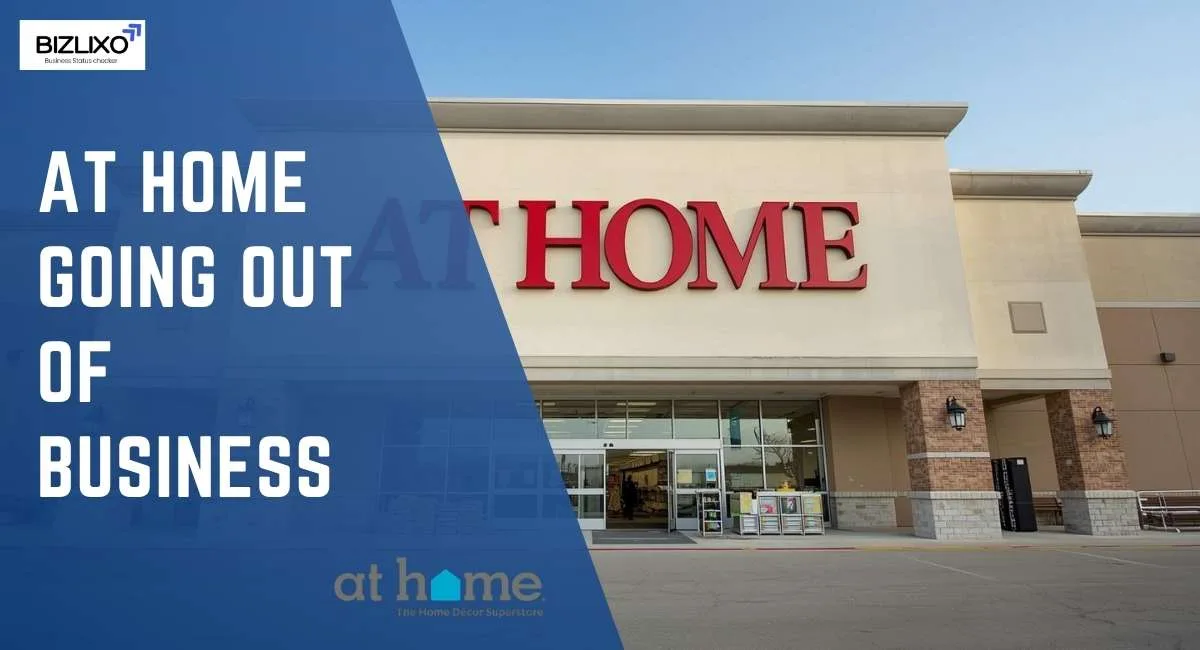
At Home going out of business rumors have circulated widely since the retailer’s strategic bankruptcy filing, but the company has officially emerged with a new survival plan. While dozens of underperforming stores are closing across the country to cut costs, the brand is not shutting down entirely and continues to operate over 200 locations. Investors and loyal shoppers are keeping a close eye on these liquidations as the company shifts its focus toward a digital-first model and more profitable regions. Understanding which locations are affected is key for anyone looking to snag clearance deals before the final 2026 closures like the Home Depot.
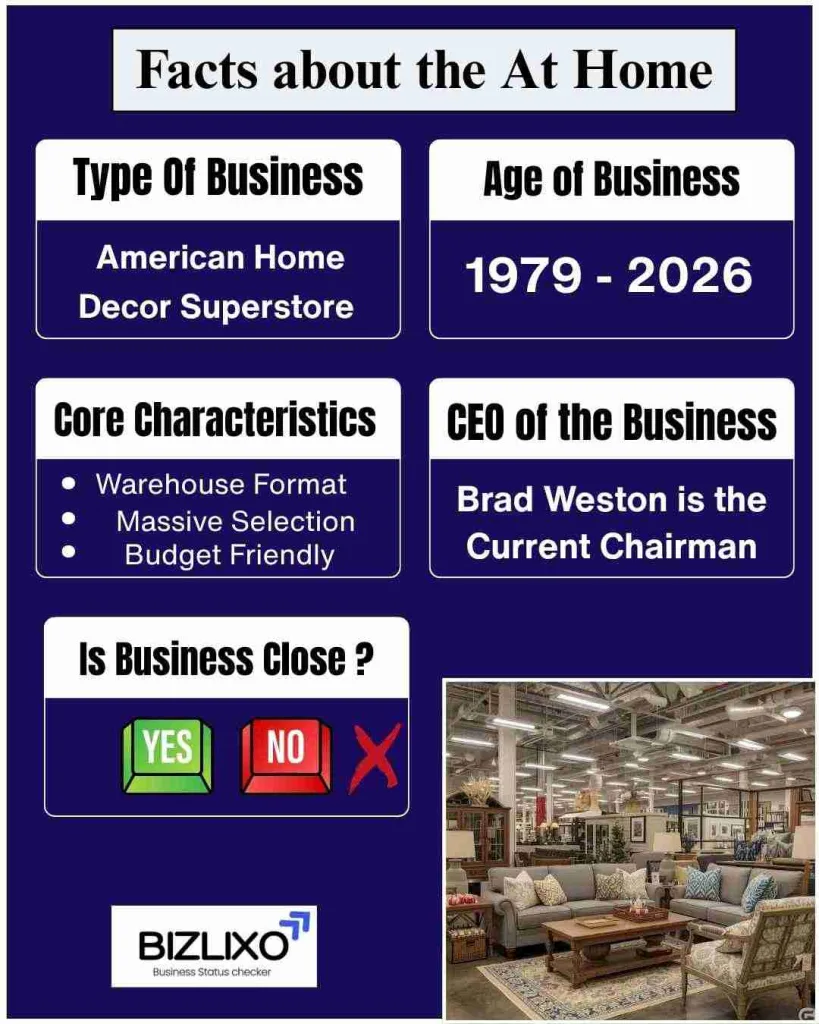
At Home Going Out of Business Timeline
- 2011 (Garden Ridge Rebrand): The company begins its transition from “Garden Ridge” to the “At Home” brand, focusing on large-format home decor.
- 2021 (Hellman & Friedman Buyout): At Home is taken private in a $2.8 billion deal, aiming to expand its physical footprint rapidly across the US.
- 2024 (The Bankruptcy Filing): Facing high debt and a slump in discretionary spending, the company files for Chapter 11 bankruptcy in June to reorganize.
- 2025 (Exiting Chapter 11): At Home successfully exits bankruptcy in October after eliminating nearly $2 billion in debt and securing new financing.
- 2026 (Store Optimization): The company initiates the closure of 32 underperforming stores to streamline its physical retail presence.
- 2026 (Strategic Shift): By September, the final round of planned liquidations is expected to conclude, leaving a leaner, more profitable store network.
Is At Home Going Out of Business? 2026 Status Update
At Home is not closing and is running as a reorganized company after leaving Chapter 11 bankruptcy in late 2025. The brand has fewer stores but still has over 230 locations, making it one of the largest home decor retailers in the U.S. Its “Value” model attracts shoppers looking for affordable furniture and seasonal items.
Instead of shutting down, the company is focusing on its best-performing markets. This approach helps stabilize cash flow for 2026. By staying smaller but stronger, At Home stays competitive. It continues to compete with retailers like IKEA and Walmart.
At Home Bankruptcy News: How the Retailer Survived 2025
The retailer survived its 2025 bankruptcy through a “pre-packaged” restructuring plan supported by 96% of its main lenders. On October 24, 2025, it came out of Chapter 11 after turning a large part of its $2 billion debt into company shares. This debt-to-equity change removed old shareholders and gave control to lenders led by Redwood Capital Management.
By cutting around $1.6 billion in debt, the company entered 2026 with a much stronger financial position. It also received $200 million in new capital to support operations. This financial reset helped prevent full liquidation. It allowed the business to continue operating into 2026.
| Financial Change | Pre-Bankruptcy (2025) | Post-Emergence (2026) |
| Total Funded Debt | ~$2.0 Billion | ~$380 Million |
| Annual Interest Expense | ~$200 Million | ~$45 Million |
| Ownership | Private Equity (H&F) | Lender Group (Redwood/Farallon) |
At Home Store Closures 2026: Full List of Closing Locations
As part of its final restructuring, At Home is closing 32 stores that are not performing well, and most closures will finish by September 2026. Many of these stores are in expensive rent areas, including five in Chicago and several in the San Francisco Bay Area. Other affected cities include Augusta, Rockford, and Oakland where rent costs were too high.
These closures are about 12% of all stores in the chain. The company is focusing on locations where business is stronger. Customers can check the official store locator for the updated “Store Closing” list. This helps people find final sale stores easily.
Why At Home is Closing Stores: Debt, Tariffs, and Strategy?
The main reason for the 2026 closures is a big increase in tariffs, which raised taxes on Chinese imports to about 145% in early 2025. Since At Home imports around 90% of its products, these higher costs made it hard to keep low prices and still make profit. The company also faced about $2 billion debt from its 2021 buyout, which left very low cash at one point.
Because of this, it is shutting large and expensive old stores that are hard to run in high inflation. This helps reduce costs and financial pressure. The company is now focusing only on strong and profitable stores.
| Key Pressure Point | Impact in 2025/2026 | Resulting Action |
| Import Tariffs | 145% on Chinese goods | Price hikes and margin squeeze |
| Liquidity Crisis | Only $14M cash on hand | Chapter 11 filing for protection |
| Store Overlap | High rent in saturated markets | 32 strategic store closures |
Shopping the At Home Liquidation Sales: What to Expect
At the 32 closing At Home stores, shoppers can get big discounts from 30% to 70% as stock is cleared out. Sales usually start with small discounts on items like furniture and rugs, then move to very low “everything must go” prices on decor and wall art.
All purchases from these closing stores are final, and normal return rules do not apply. Loyalty members may get early alerts for final weekend sales with very cheap prices. Because stock sells fast, large furniture items often go out within the first few weeks. The sale keeps getting cheaper until the stores are empty.
At Home vs. Bankruptcy: Will the Furniture Giant Stay Open?
Retail experts in April 2026 believe At Home will stay open because it has already solved its main financial problems. Instead of using bankruptcy to close down, the company used it to rebuild and strengthen its future. The new owners are now focusing on running the business better instead of expanding too fast.
This has reduced the risk of another financial failure. Even though the home goods market is still difficult, the company now has less debt, which gives it more stability. Unless a major global supply problem happens, At Home is expected to keep operating in the US retail market.
The Future of At Home: A New Chapter After Debt Elimination
After bankruptcy, At Home is moving into a new phase where it is shifting from very large warehouses to smaller and more efficient store layouts. The company is using new funding to improve its online and in-store shopping system, so customers can buy online and pick up in store at all locations.
By 2027, it plans to reduce reliance on China and instead source more products from India and Vietnam. This change will help protect it from future tariff increases while keeping prices competitive. The brand is now focusing more on digital shopping. Physical stores will mainly work as local pickup and delivery points.
| Future Goal | Target Year | Expected Outcome |
| Supply Diversity | 2027 | 40% reduction in China dependency |
| Digital Sales | 2026 | 20% of total revenue from online |
| Profitability | 2028 | Return to pre-pandemic net margins |
Is Your Local At Home Closing? State-by-State Guide
In the 2026 restructuring, California has the most closures, with 10 stores closing in cities like San Diego, Sacramento, and Napa. Illinois is the second most affected state, with closures in Chicago, Plainfield, and West Dundee as the company reduces its Midwest locations. In the South, Georgia and Texas have only a few closures, such as Augusta and North Dallas, mostly due to lease ending.
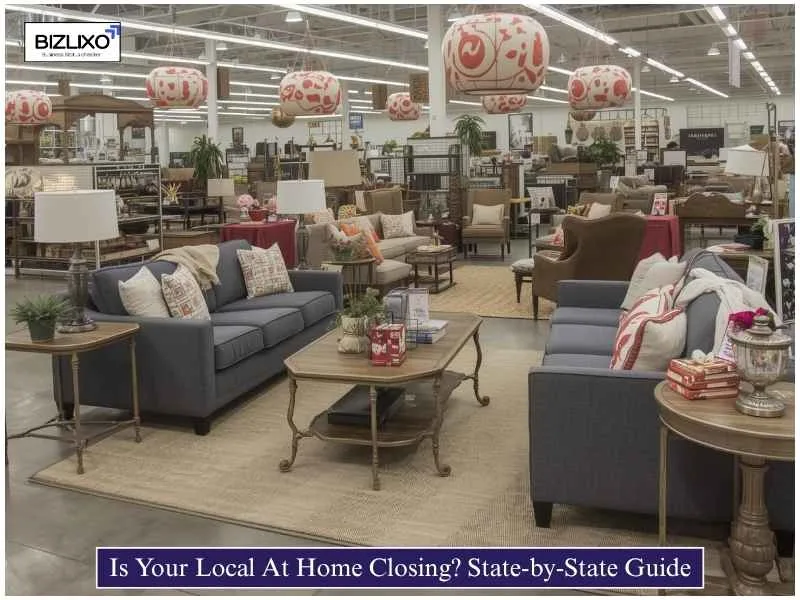
In the Northeast, some stores in Massachusetts (Stoughton) and New Jersey (East Windsor) are also closing in 2026. Stores in stable areas are mostly not affected. If a store is not in a costly or weak shopping area, it is likely safe for now.
| State | Primary Impact Level | Specific Closing Locations (2026) |
| California | Highest Impact | San Diego (Balboa), Sacramento (Delta Shores), Napa, San Jose (Newhall Dr), Chico, Long Beach, Foothill Ranch, and Costa Mesa. |
| Illinois | Moderate Impact | Chicago (multiple sites), Plainfield, West Dundee (Spring Hill), Peoria, and Rockford. |
| Georgia | Specific Sites | Augusta, Alpharetta (Douglas Rd), Atlanta (Morosgo Way), and Decatur (Memorial Dr). |
| Texas | Specific Sites | North Dallas (McKinney), Dickinson (Gulf Fwy), and select high-rent regional lease expirations. |
| New Jersey | Regional Optimization | East Windsor, Middletown Township, Ledgewood, and Princeton (Nassau Park Blvd). |
| Massachusetts | Targeted Closure | Stoughton (Central St). |
| Other States | Scattered Closures | Little Rock (AR), Aurora (CO), Boise (ID), Blue Ash (OH), and Portland (OR). |
At Home’s 2026 Survival Plan: Moving from Malls to Mobile
A big part of At Home’s 2026 plan is growing its mobile app, which now has 5 million active users. The company is using AI alerts to send deals and flash sale updates so customers visit stores more often without printed ads. This mobile-first system helps the company understand what customers like and manage stock in real time.
By shifting marketing from mall ads to social media, it has reduced customer cost by 18%. This approach makes shopping easier and more digital. The goal is to turn At Home into a mobile-based shopping brand for future homeowners.
Impact on Employees: Layoffs and Store Shut-Downs Explained
The 2026 store closures have led to about 1,200 job losses at the 32 affected stores and also at the main office in Plano, Texas. At Home says it is giving severance pay and helping some workers find new jobs as part of the plan. In stores that are staying open, many employees now have new roles focused on online orders and shipping from stores.
These job cuts were a hard part of the restructuring, but the company says they helped protect more than 6,000 jobs across the country. The impact on local areas is serious, but most employees are still working like the Beekman.
At Home Going Out of Business Texas
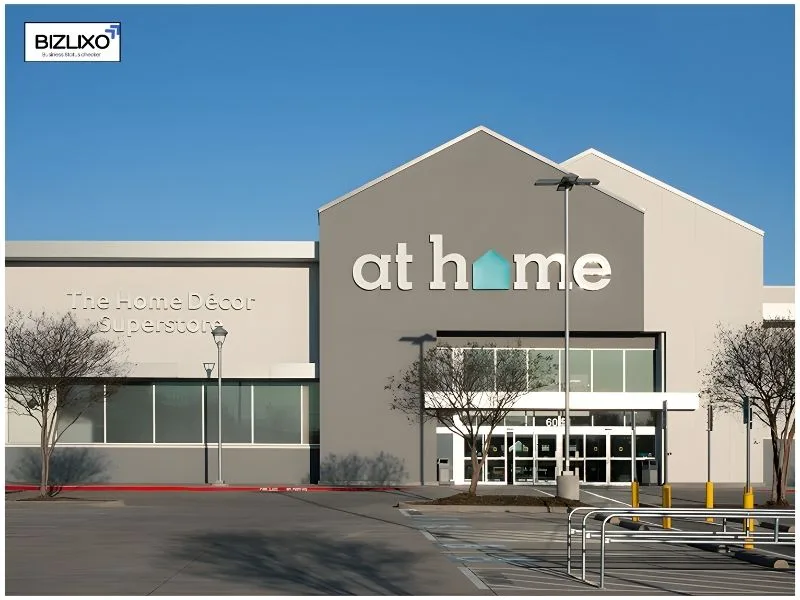
At Home is not fully going out of business in Texas in 2026, but it is closing some weak or high-cost stores. The company is doing this to improve its overall financial health and reduce expenses. Texas is still its strongest market with more than 40 stores running. Only selected locations in places like North Dallas and McKinney are affected. These closures are part of a planned strategy, not a full shutdown in the state. The brand will continue operating normally in most parts of Texas.
At Home Going Out of Business Online Sale
At Home is not doing a full going-out-of-business online sale, but it has started a clearance sale in 2026. This sale includes old and seasonal stock that the company wants to clear out. Customers can get discounts from 30% to 60% on many home items. Products like rugs, furniture, and decor are included in this offer. However, most clearance items are final sale and cannot be returned. This is mainly to make space for new collections.
Which At Home Stores are Closing in Georgia?
In Georgia, At Home is closing a few selected stores as part of its 2026 restructuring plan. The confirmed closures include the Augusta store and the Duluth location. A store in the Decatur area is also being closed due to redevelopment plans. These closures are happening because of low performance and market changes. Customers are advised to shop before final closing sales end. Other stores in Georgia will continue operating normally.
At Home Going Out of Business Michigan
In Michigan, At Home is closing only one main store in Ypsilanti as part of its 2026 changes. This decision was made after reviewing store performance across the state. Other locations in cities like Troy and Bloomfield Hills will stay open. The company is shifting focus to stronger and more profitable stores. These changes are part of a plan to reduce debt and improve stability. Overall, most Michigan stores are still operating normally.
My Research about At Home
As you know, I am the founder of Bizlixo, where I share business status and retail market updates. In my research about At Home, I found that it is a home décor and furniture retail chain that is currently operating but facing financial pressure and restructuring efforts. The company is focusing on improving its store performance and managing costs in a challenging retail environment. Overall, At Home is still active in the market and working to stabilize its business position.
Final Remarks
In conclusion, At Home is not going out of business but is going through a structured restructuring process to strengthen its financial position. The company is closing underperforming stores while focusing on profitable locations and improving efficiency. Despite challenges in the retail sector, it continues to operate and serve customers across the country. Overall, At Home is actively working toward long-term stability rather than liquidation.
FAQs
Is At Home closing all of its stores in 2026?
No, At Home is only closing about 32 underperforming stores while keeping over 200 locations open.
Can I still use my At Home gift cards at closing locations?
Yes, gift cards remain valid at all operating stores and for online purchases.
Will At Home’s online store stay open if more shops close?
Yes, the company is prioritizing its e-commerce platform as part of its post-bankruptcy growth.
Are there liquidation sales happening at At Home stores right now?
Closing locations are currently offering deep discounts as they clear out remaining inventory.
Is At Home filing for bankruptcy again in 2026?
There is no new filing; the company is currently operating under its 2025 exit reorganization plan.